Architecture comparison
Solana vs Sui
A technical comparison of Solana's performance-first L1 and Sui's object-native Move platform for teams choosing a non-EVM build path.
Solana vs Sui is distribution versus model fit
Solana and Sui are both alternatives to the EVM default, but they are not making the same argument. Solana says high-throughput consumer crypto needs one fast execution environment, a serious validator economy, Rust/SVM performance, and enough ecosystem gravity that users actually show up. Sui says the asset model itself should be cleaner: objects, ownership, Move safety, programmable transaction blocks, and parallel execution shaped around digital assets rather than account-balance conventions.
That makes the comparison more interesting than a simple market-cap table. Solana is stronger today on liquidity, mindshare, wallet familiarity, open-source developer count, and proof that retail users will interact with apps at scale. Sui is stronger as an architecture bet for object-heavy products where owned assets, shared objects, type safety, and composable transaction flows are first-order requirements.
The practical question is whether a team needs distribution now or a cleaner model for the product it is trying to build.
Market snapshot (May 28, 2026)
The figures below are variable-backed, not hand-coded into the article body.
| Metric | Solana | Sui | Read |
|---|---|---|---|
| Market cap | $47.8B | $3.77B | Solana has much more market gravity; Sui remains a smaller technical-pedigree bet. |
| Market-cap rank | #7 | #31 | Rank affects exchange assumptions, buyer confidence, and ecosystem budget. |
| 3-month market-cap change | +2.59% | +9.06% | Momentum matters, but it should not substitute for architecture fit. |
| 30-day token price change | -1.10% | +2.18% | Short-term token behavior is context for positioning, not a build decision. |
| DeFiLlama chain TVL | $5.24B | $538.5M | Solana has deeper live liquidity; Sui's architecture still has to convert design quality into durable capital. |
Architecture split: account-performance versus object-native assets
Both chains use Rust-heavy core infrastructure, but their developer models push teams toward very different product designs.
| Dimension | Solana | Sui | Why it matters |
|---|---|---|---|
| Programming model | Rust programs operating over explicit accounts, commonly with Anchor or lower-level SVM patterns | Sui Move modules operating over typed objects with ownership rules | Solana rewards performance-aware account design; Sui rewards asset modeling and type-safe object flows. |
| State mental model | Accounts are passed into programs; parallelism depends on account access and locks | Objects can be owned, shared, immutable, or object-owned, with independent owned-object paths | Sui can be more natural for assets that behave like things, not just balances. |
| Transaction composition | Composition is powerful, but often infrastructure-heavy and account-planning-intensive | Programmable transaction blocks can compose multiple Move calls and typed object inputs | Sui gives some complex asset workflows a cleaner transaction-level composition model. |
| Ecosystem maturity | More users, liquidity, wallet familiarity, and Solana-native founder energy | Smaller ecosystem with strong technical team and differentiated language/model | Solana is easier to justify commercially; Sui may be more elegant for the right app. |
Solana's case: performance that already has users
Solana is the easier non-EVM recommendation when a team needs users and liquidity quickly. It has the larger developer ecosystem, larger retail community, stronger consumer-app narrative, more visible app revenue, and a clearer track record of high-frequency onchain behavior.
The Solana developer has to think in accounts, compute budgets, priority fees, RPC quality, indexing, wallet flows, token extensions, and validator/network conditions. That is not simple, but it maps directly to products where repeated low-cost interaction is the point.
Solana's weak point is not a lack of seriousness. It is the diligence surface: validator economics, client concentration around Agave/Jito while Firedancer matures, operational complexity, congestion behavior, and the social overhang of memecoin-heavy activity.
Sui's case: the object model is not marketing fluff
Sui's strongest argument is that many onchain products are easier to model as owned things. A game item, credential, claim, device permission, payment object, vault position, ticket, or commerce primitive can be treated as an object with ownership and state rather than as a looser pattern of balances and contract storage.
Sui Move gives the platform a safety-first language lineage, and Sui's programmable transaction blocks move some composition from smart-contract architecture into the transaction layer. That can make complex user actions cleaner when typed objects are passed through multiple operations.
The cost is adoption. A smaller Move talent market, less liquidity, smaller community footprint, and fewer default integration paths make Sui a more deliberate bet. Architecture can be better and still lose a near-term ecosystem decision.
Developer and product-fit comparison
The best choice depends on whether the product is trying to win by distribution, transaction feel, or asset-model clarity.
| Use case | Better default | Reason |
|---|---|---|
| Consumer trading, mints, payments-like flows, social apps | Solana | Solana has stronger current consumer gravity, wallet familiarity, liquidity, and high-frequency app culture. |
| Object-heavy games, inventory, credentials, owned digital goods | Sui | Sui's object model maps naturally to owned assets and programmable transaction flows. |
| A product that needs many trained developers quickly | Solana | Solana's developer market is smaller than EVM, but still much larger and more visible than Sui's. |
| A team that wants Move safety and typed asset semantics | Sui | Sui is built around Move and object ownership rather than treating those as secondary abstractions. |
| A launch that depends on immediate liquidity | Solana | Solana is far deeper today on live liquidity, retail attention, and app distribution. |
Validator and risk posture
Solana's validator story is about professionalized performance. Stake delegation, commission, hardware, bandwidth, client choice, leader slots, and network geography all matter. Its official staking docs are direct that there is no in-protocol slashing implementation today, which makes delegation and reputation part of the security conversation.
Sui's validator story is more controlled and committee-oriented. The tokenomics docs describe epochs, validator processing, staking pools, storage-fund dynamics, and validator reward accounting. This is not the same security story as Solana, and the storage-fund component deserves attention because Sui explicitly tries to handle long-term data cost within the economic model.
The diligence difference is sharp: Solana asks whether a high-performance validator economy remains decentralized enough; Sui asks whether a smaller controlled validator and developer ecosystem can grow into the architecture it is promising.
The market-positioning read
Solana is the stronger market today. It has the broader founder story, more retail attention, more visible app usage, and more practical gravity for agencies and product teams that need to ship into a live user base.
Sui is the more differentiated architecture. It should not be dismissed as another fast L1 because the object model, Sui Move, programmable transaction blocks, storage economics, and data-stack direction are real technical distinctions.
The safest public recommendation is not 'Solana beats Sui' or 'Sui is better tech.' It is this: choose Solana when distribution and consumer performance are the constraint; choose Sui when object-native design materially simplifies the product and the team can absorb ecosystem risk.
Solana vs Sui FAQ
The common questions usually come down to maturity versus architecture.
Is Sui technically better than Solana?
Sui has a more differentiated object-native programming model, but that does not make it universally better. Solana has stronger market adoption, liquidity, developer activity, and consumer-product momentum today.
What is the biggest difference between SVM and Sui Move?
SVM development is centered on Solana programs and account access patterns. Sui Move development is centered on typed objects, ownership, and programmable transaction blocks. The difference affects product modeling, not just language syntax.
Which is better for gaming, Solana or Sui?
Solana is stronger when a game needs existing users, liquidity, and fast consumer UX now. Sui is compelling when owned objects, inventory, assets, and complex transaction flows are central to the game design.
Should an agency claim Sui expertise if it only knows Solana?
No. Solana skill proves performance-chain familiarity, but Sui requires Move, object-model, storage, validator, wallet, and indexing knowledge that is different enough to diligence separately.
Sources behind this comparison
Market data is dated. Architecture claims are grounded in primary docs and should be treated separately from token momentum.
Used for market cap, market rank, 30-day token change, and 90-day market-cap change calculations.
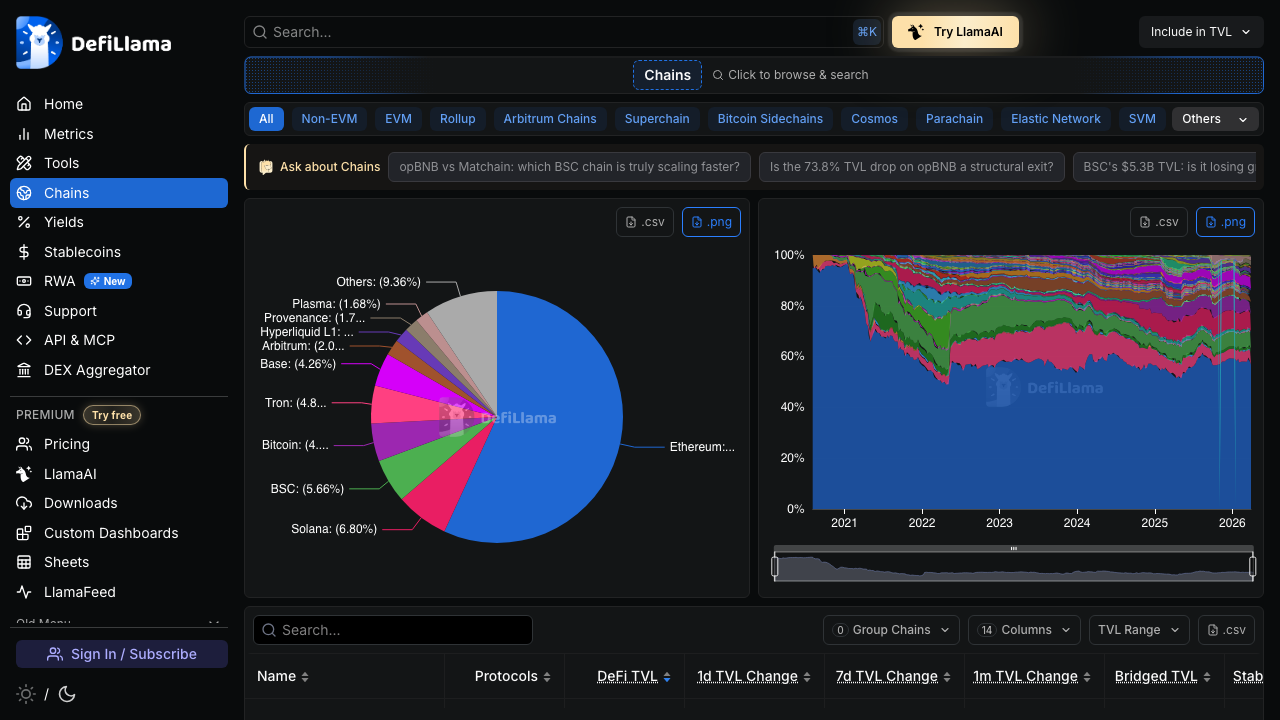
Used for TVL context.
Useful for Solana validator, client, uptime, tooling, and developer context.
Grounds the staking, delegation, reward, commission, and slashing discussion.
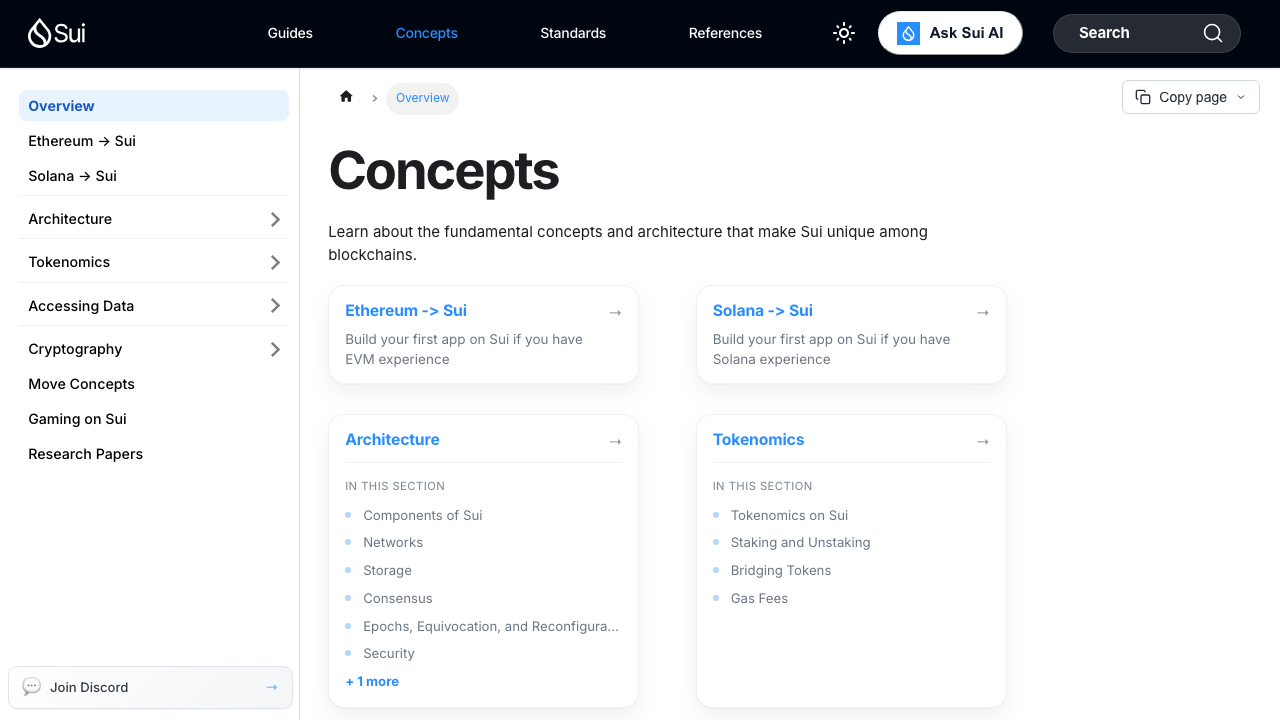
Grounds Sui's high-throughput, low-latency, asset-oriented platform framing.
Grounds validator rewards, staking pools, epochs, and storage-fund economics.

Used as directional open-source developer activity context.